

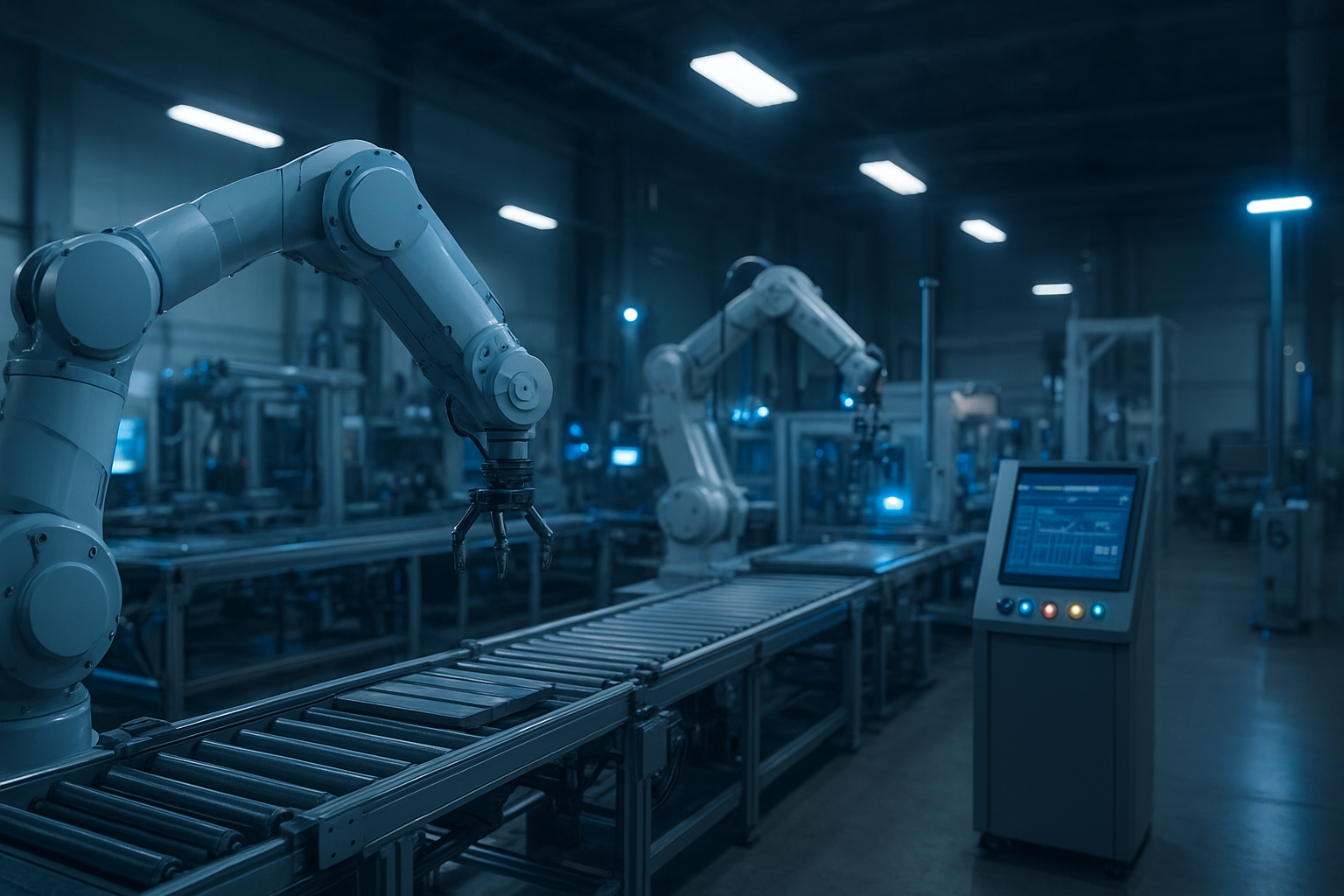

Uses computers, robotics, and mechanical controls to operate machines and processes in manufacturing and other industries, with the goal of improving efficiency, quality, and safety by minimizing human intervention. Key technologies include industrial robots, Programmable Logic Controllers (PLCs), and SCADA systems, while areas like factory, process, and logistics automation are specific applications.
Core concepts
- Industrial automation: The use of automated systems to control industrial machinery and processes, often integrating computers and information technology with mechanical equipment.
- Goals: To increase efficiency and productivity, improve product quality, and reduce risks for human workers by taking over repetitive or dangerous tasks.
- Applications:
- Factory automation: Incorporates machinery like integrated assembly lines and robotic arms to manufacture and assemble goods.
- Process automation: Applies to controlling continuous processes, such as those in refineries or paper mills, using sensors, controllers, and actuators.
- Logistics automation: Uses systems like high-capacity sortation and robots for tasks like palletizing, depalletizing, and order picking.
Key technologies
- Industrial robots: Automated, programmable machines with three or more axes of movement, used for tasks like welding, painting, assembly, and packaging.
- Programmable Logic Controllers (PLCs): Industrial computers that are ruggedized for control of manufacturing processes and can control a variety of devices.
- SCADA (Supervisory Control and Data Acquisition) systems: Used to monitor and control industrial processes, often across large geographic areas.
- CNC (Computer Numerical Control) machines: Machine tools that are automated by computer commands, which provide more precise and flexible control than older manual or mechanical methods.
Roles in automation
- Automation Engineers: Design, develop, and manage automated machines and systems.
- Automation Technicians: Monitor, troubleshoot, and repair automated systems, requiring knowledge of electronics, mechanics, and computers.